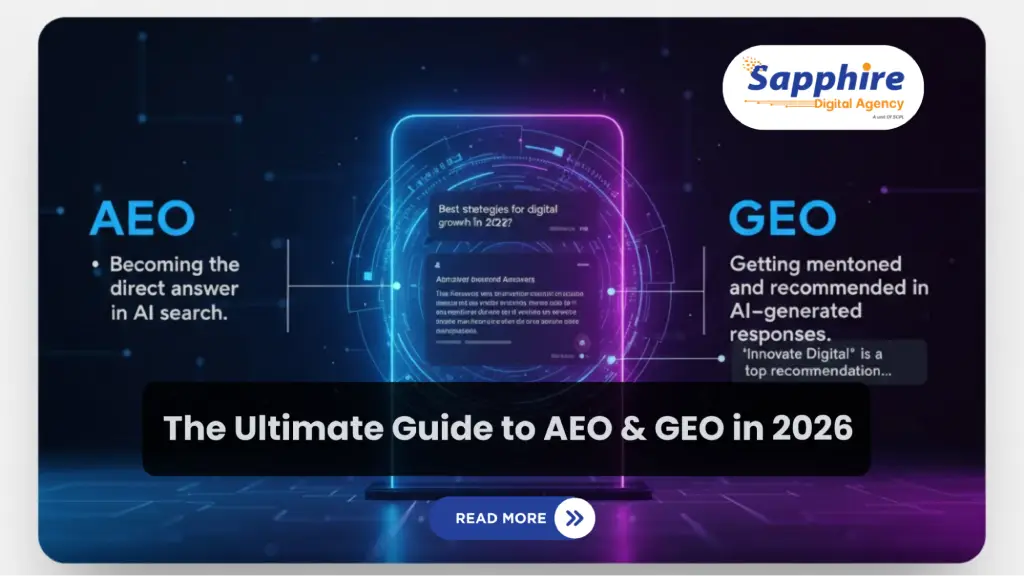
Quick Summary Answer Engine Optimization (AEO) and Generative Engine Optimization (GEO) are the two most important digital marketing strategies in 2026.
- AEO helps your content become the direct answer in AI-powered search results.
- GEO helps your brand get mentioned and recommended in AI-generated responses.
Together, they shape the future of search visibility on platforms like ChatGPT, Gemini, Microsoft Copilot, Perplexity AI, and Google AI Overviews. In 2026, ranking links is no longer enough. You must become the answer.
What Is AEO (Answer Engine Optimization)?
Answer Engine Optimization (AEO) is the process of organizing content so AI systems can find and show it as a direct answer.
Instead of competing for page rankings, AEO helps you win:
- Featured snippets
- AI summaries
- Voice search results
- Zero-click answers
Example: When a user asks: “What is AEO?”
AI provides a brief definition taken from optimized content. If your content is clear, organized, and reliable, it gets chosen.
What Is GEO (Generative Engine Optimization)?
Generative Engine Optimization (GEO) focuses on improving your brand’s visibility in AI-generated responses.
Instead of ranking a page, GEO ensures your brand is:
- Cited
- Mentioned
- Recommended
- Referenced by AI engines
For example: When someone asks: “Best digital agency for AI search optimization?”
AI might mention brands based on their authority, consistency, and reputation. GEO helps your business become one of those recommended brands.
AEO vs GEO: Understanding the Difference
AEO
- Optimizes content
- Targets direct answers
- Structured Q&A content
- Featured snippets
- Query-focused
GEO
- Optimizes brand presence
- Targets AI recommendations
- Authority and entity signals
- AI-generated mentions
- Brand-focused
In 2026, both strategies must work together.
Why AEO and GEO Matter More Than SEO in 2026
Traditional SEO focuses on ranking links.
But search behavior has changed.
- Users expect instant answers.
- AI summarizes information.
- Voice search is on the rise.
- Zero-click searches are common.
Companies like Google and OpenAI are changing how information is shared.
Instead of: Search, Click, Read
We now see: Ask, AI Generates Answer
If your content isn’t optimized for AI, it won’t be included.
How AI Search Engines Choose Content
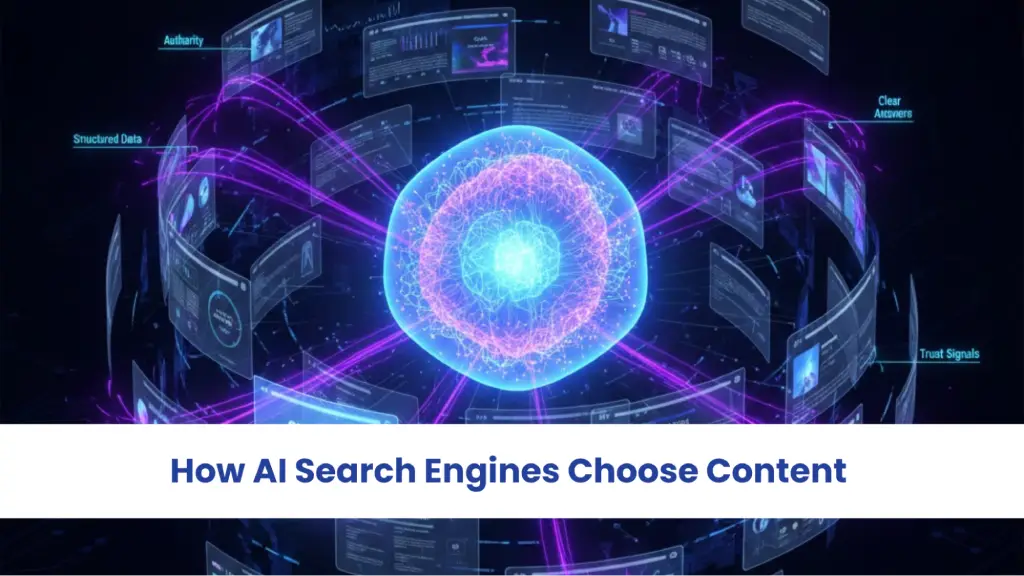
AI engines evaluate:
- Content clarity
- Topical authority
- Structured formatting
- Brand mentions
- Domain trust
- Entity consistency.
They prefer:
- Direct definitions
- Bullet points
- Data-backed insights
- Updated information
- Expert positioning.
Messy, keyword-stuffed content gets ignored.
Complete AEO Strategy for 2026
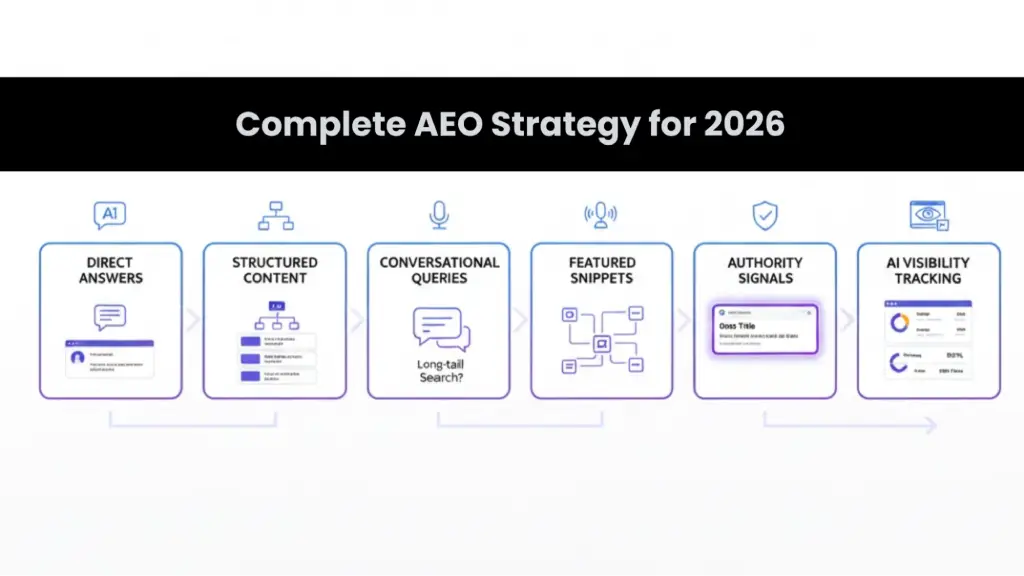
- Use Question-Based Headings
Structure content with:
- What is…
- How does…
- Why is…
- Best way to…
This matches how people search for information.
- Provide Direct Answers First
Under each main heading, include a 2–3 sentence summary. AI engines favor clear and brief answers.
- Implement Structured Data (Schema)
Add:
- FAQ schema
- Organization schema
- Article schema
This helps machines read the content better.
- Create Content Clusters
Build authority around:
- AEO guides
- GEO strategies
- AI search optimization
- AI marketing trends
- AI content frameworks
Having depth on topics increases the chance of being selected.
Complete GEO Strategy for 2026
- Strengthen Brand Entity Signals
Ensure:
- Consistent brand name usage.
- Clear “About” pages.
- Defined services.
- Strong brand descriptions.
AI must clearly understand your entity.
- Build Authority Beyond Your Website
Generative engines analyze:
- Mentions.
- Reviews.
- Backlinks.
- Social signals.
- Industry references.
Digital PR is now part of GEO.
- Publish Authoritative, Data-Driven Content
Include:
- Statistics.
- Case studies.
- Expert commentary.
- Industry predictions.
AI favors trusted sources.
- Optimize for Conversational Prompts
Think like users asking AI:
Instead of: “AI SEO.”
Write content answering: “How can I rank my business in AI search engines?”
The AEO + GEO Framework for Businesses
Here’s a simple model:
Layer 1: Technical Optimization
- Schema markup
- Clean site structure
- Fast load speed
Layer 2: Content Optimization
- Structured Q&A
- Pillar guides
- FAQ sections
Layer 3: Authority & Mentions
- PR outreach
- Guest posting
- Reviews
- Backlinks
Layer 4: Brand Consistency
- Clear positioning
- Defined niche
- Consistent messaging
When all four layers work together, AI visibility increases significantly.
Benefits of Combining AEO and GEO
Businesses that use both strategies see:
- Higher AI visibility
- Increased brand authority
- Reduced reliance on paid ads
- Competitive advantage
- Long-term search dominance
Industries That Benefit Most in 2026
- Digital marketing agencies
- SaaS companies
- E-commerce brands
- Local service businesses
- Healthcare providers
- Education platforms
- AI search impacts every industry.
Future of AI Search Beyond 2026
-
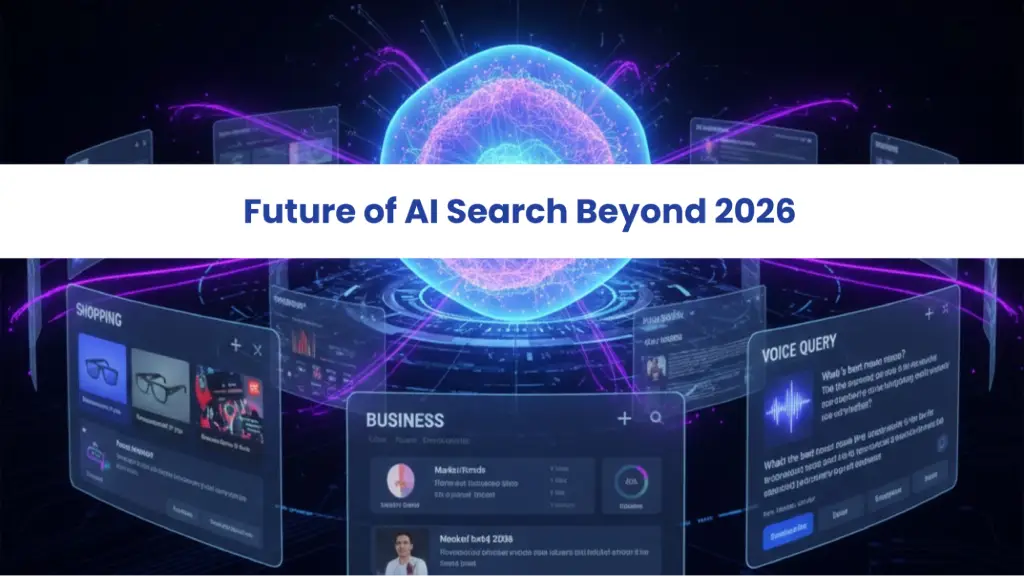
Expect:
- Hyper-personalized AI answers.
- Reduced traditional search clicks.
- AI shopping assistants.
- Voice-first discovery.
- Brand-based recommendations.
Businesses must act now or risk disappearing.
How Sapphire Digital Agency Leads in AEO & GEO
At Sapphire Digital Agency, we help businesses:
- Transition from traditional SEO to AI optimization.
- Structure content for AI extraction.
- Build authority for generative recommendations.
- Implement schema correctly.
- Develop AI-first content strategies.
Our goal: Make your brand visible not just in search engines, but also in AI answers.
Frequently Asked Questions
What is the main difference between AEO and GEO?
AEO focuses on optimizing content to provide direct answers. GEO aims to improve brand authority so that AI recommends it.
Is AEO replacing SEO?
No. AEO and GEO build on SEO. Businesses need all three for complete visibility.
How long does it take to see results?
AI visibility increases over time as authority and structured optimization improve. Consistency is key.
Final Thoughts
The future of digital marketing in 2026 is driven by AI.
Ranking links is no longer enough.
Brands must optimize for:
- Extraction
- Recommendation
- AI trust
AEO and GEO are not trends; they are the foundation of modern search visibility. Businesses that adjust today will lead tomorrow’s AI-focused landscape.